

Your Professional Valve Manufacturers
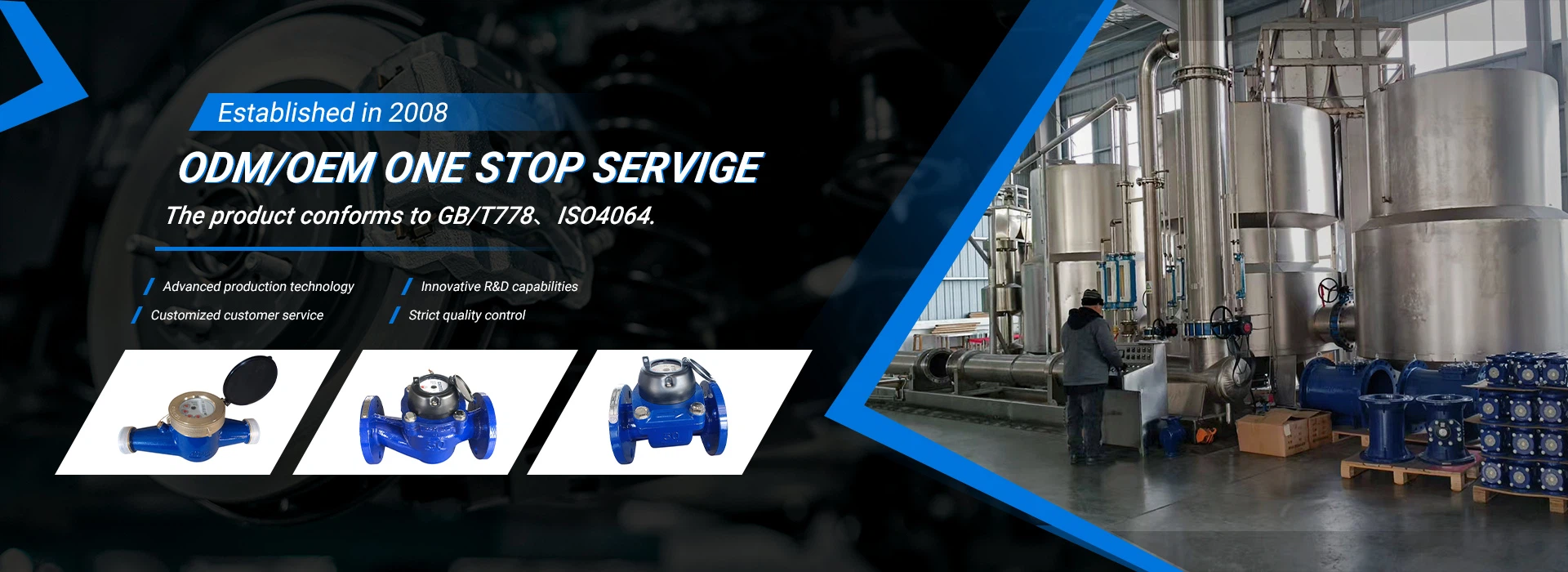
M/s Lianyungang Hytten Meter Co.,Ltd. Established in 2008 with amount of investment of 50 million RMB. The company occupy an area of 26000 square meters. The building area is 18,000 square meters. Our company is a product development, manufacturing, sales in one enterprise. Our main products are Medium and High grade water meter for Export, include hot &cold water meter.


Why Choose Us
Production Equipment
We are equipped with advanced calibration and testing devices, injection molding machines, laser engravers, and steel plate printers, ensuring high precision, consistent quality, and reliable performance in every water meter.
Main Market
Our products are exported to over 30 countries and regions, including Europe, Southeast Asia, the Middle East, Africa, and North and South America, earning widespread acclaim from domestic and international customers.
Professional team
We have a professional team that is familiar with product performance, can understand customer needs in a timely manner, and can fully demonstrate the advantages of our products. We also have dedicated after-sales service personnel to ensure a 24-hour response to user requests and to provide practical solutions.
Our Certificates
Our water meters are certified to meet national and international standards, including ISO 9001, ISO 4064, GBT 778, MID, and CE, ensuring reliable performance and global market acceptance.
Benefits of Valve


Control fluid flow
One of the primary advantages of valves is that they allow users to control the flow of fluids and gases through a system. This means that operators can adjust the flow rate and pressure to meet specific requirements, ensuring that the system operates efficiently.
Prevent backflow
Valves can also prevent backflow, which is when fluid or gas flows in the opposite direction from what is intended. This can be important in preventing contamination or damage to equipment.
Provide safety
Valves can be used as safety devices, shutting off the flow of fluid or gas if pressure or temperature exceeds safe limits. This can help prevent accidents or damage to equipment.
Durability
Valves are designed to be durable and reliable, even in harsh environments. They are often made of materials such as stainless steel, brass, or titanium, which can withstand high pressures, temperatures, and corrosive fluids.
Flexibility
Valves come in a wide range of designs and sizes, making them adaptable to different applications. Whether you need a valve for a small household appliance or a large industrial system, there is likely a valve that can meet your needs.
Industrial Applications of Valves
Power Generation
Steam Control: Regulate steam flow to turbines and heat exchangers.
Cooling Water Systems: Control coolant circulation to prevent overheating.
Oil and Gas
Pipeline Control: Manage the flow of crude oil, natural gas, and refined fuels.
Refinery Operations: Handle high-temperature, high-pressure, and corrosive fluids.
Chemical Processing
Batch Mixing: Accurately control flow and dosing of chemicals.
Material Compatibility: Require corrosion-resistant materials to prevent leakage and degradation.
Water Treatment & Distribution
Purification Systems: Meter chemicals used in disinfection and filtration.
Municipal Distribution: Control pressure zones and isolate service areas for maintenance.
Pharmaceutical & Biotechnology
Sterile Environments: Maintain clean-in-place (CIP) and steam-in-place (SIP) protocols.
Bioreactor Flow Control: Regulate gases, media, and nutrients in production environments.
General Manufacturing
Food & Beverage: Manage ingredient flow while maintaining sanitary conditions.
Pulp & Paper: Regulate slurry and chemical flow during production.
Materials
|
No. |
Part |
Material |
No. |
Part |
Material |
|
1 |
Body |
Ductile Iron |
10 |
Gland |
Ductile Iron |
|
2 |
Seat |
Brass |
11 |
T-Bolt T |
Carbon steel |
|
3 |
Disc |
Brass |
12 |
Nut |
Carbon steel |
|
4 |
Bolt |
Carbon Steel |
13 |
Bonnet |
Ductile Iron |
|
5 |
Steel Ball |
Carbon Steel |
14 |
Stem Nut |
Brass |
|
6 |
Stem |
X20Cr13 |
15 |
Bolt |
Carbon steel |
|
7 |
Gasket |
NBR |
16 |
Wheel |
Carbon steel |
|
8 |
Bonnet Bolt |
Carbon Steel |
17 |
Washer |
Carbon steel |
|
9 |
Packing |
Graphite |
18 |
Wheel Bolt |
Carbon steel |
Types of Valve
Gate Valves
Gate valves are widely used in applications that require a full flow of fluids. They operate by lifting a gate or wedge to create an opening through which the fluid can pass. Gate valves are commonly used in industries such as oil and gas, chemical, and water treatment plants.
Ball Valves
Ball valves are commonly used in applications where tight shutoff is required. They are a type of quarter-turn valve that uses a ball-shaped disk to control the flow of fluids. When the handle is turned, the ball rotates to open or close the flow passage. Ball valves are commonly used in industries such as plumbing, heating, and air conditioning systems.
Butterfly Valves
Butterfly valves are used in applications that require the regulation of the flow of fluids in large pipes. They consist of a disk that rotates around a shaft, creating a tight seal to regulate the flow of fluids. Butterfly valves are commonly used in industries such as water treatment, power generation, and chemical processing.
Check Valves
Check valves are designed to prevent backflow in pipelines. They allow fluid to flow in only one direction, preventing the reversal of flow that can cause damage to equipment. Check valves are commonly used in industries such as HVAC, water treatment, and chemical processing.
Globe Valves
Globe valves are used in applications that require precise control of the flow of fluids. They consist of a valve body, a disk, and a stem. The stem moves the disk up and down to regulate the flow of fluids. Globe valves are commonly used in industries such as chemical processing, pharmaceuticals, and power generation.
Diaphragm Valves
Diaphragm valves are used in applications that require a seal against contaminants. They consist of a flexible diaphragm that is pressed against a valve seat to regulate the flow of fluids. Diaphragm valves are commonly used in industries such as food and beverage, pharmaceuticals, and chemical processing.
Packaging and Delivery
|
Package Size: |
20X20X2 cm |
|
Packing weight: |
1.500 kg |
|
Package Details: |
Inner Package:Bubble bags + plastic cover |
|
Delivery Details: |
Generally it is 5-10 days if the goods are in stock. Or 20~35 days after receiving the payment. |
Packaging & Shipping


FAQ
As one of the leading valve manufacturers and suppliers in China, we warmly welcome you to buy bulk high-grade valve for sale here from our factory. All customized products are with high quality and competitive price.
check valve in pipeline, Air Release Valve, the check valve